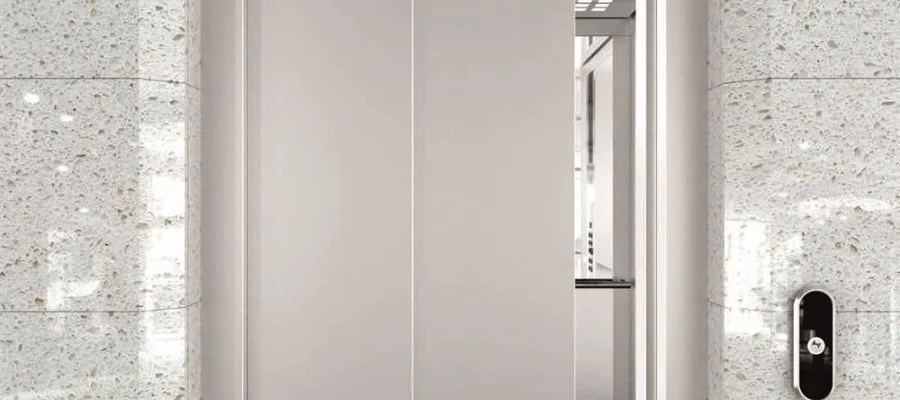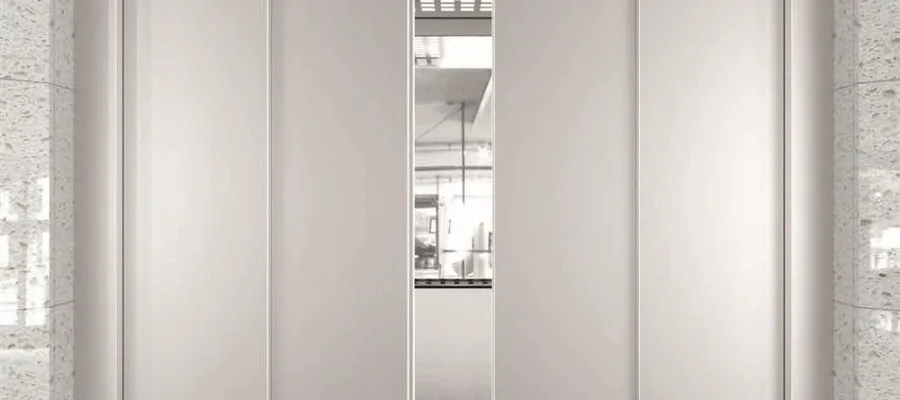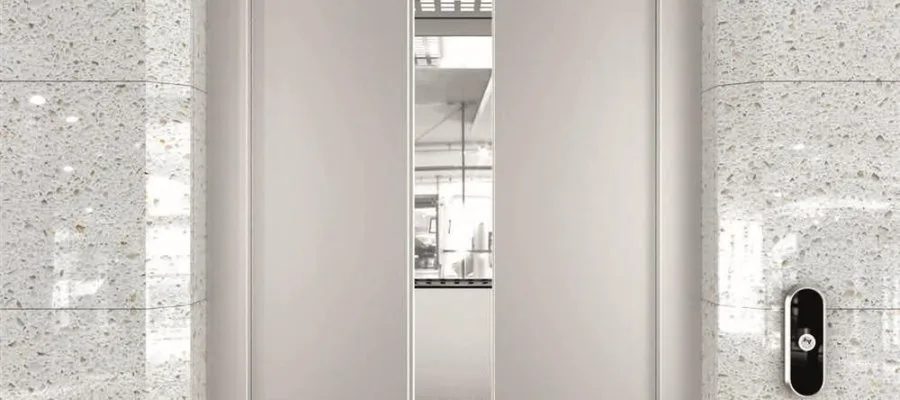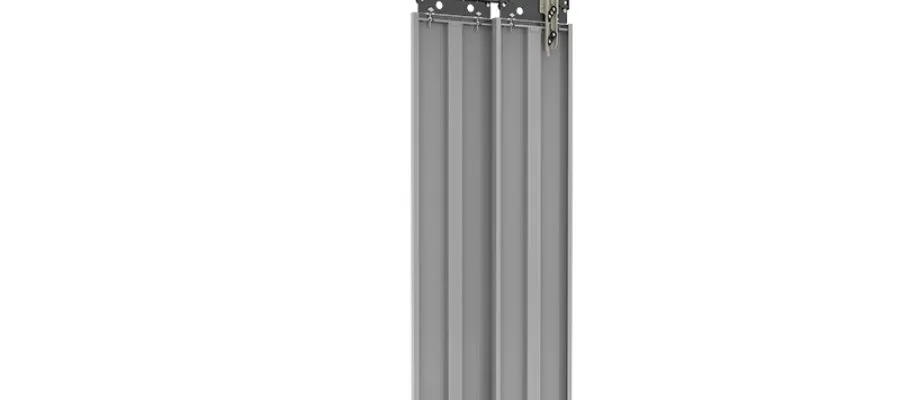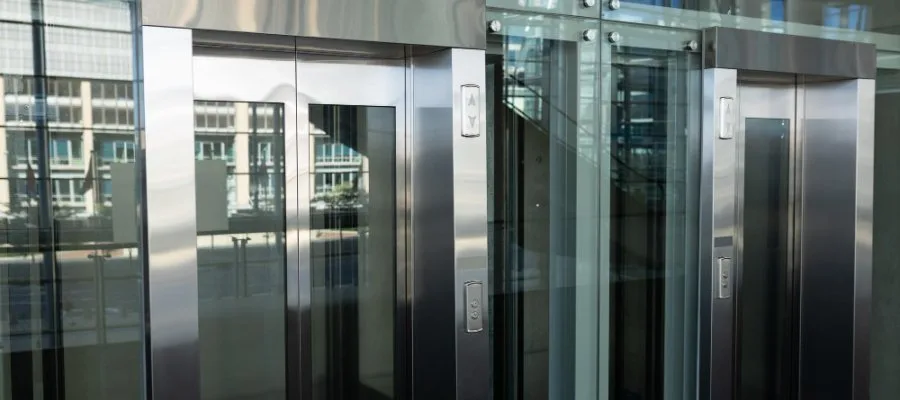


An elevator door is one of the metal faces in a building that hands touch most. When painted sheet is scratched, corrosion walks from the base metal; stainless (stainless steel, commonly AISI 304) renews the surface with its oxide film. That is why hotel lobbies, hospitals, food plants and coastal buildings specify a stainless landing and cabin face. ECHO offers painted and stainless finishes on the same mechanism family; not every project has to be 304.
When do 304 and 316 part company?
AISI 304 (EN 1.4301) is enough for interiors, city housing and most public elevators. AISI 316 (EN 1.4401 / 1.4404) contains molybdenum; it resists chloride pitting (sea salt, some cleaning chemicals, pool surrounds) better than 304. On Mersin and similar coastal elevations, a landing door that faces outside is a 316 conversation. Writing 316 on an inland housing job without a reason is the wrong cost. The call is locked on the quote with the environment and the budget.
Why is the finish (hairline, Scotch-Brite) written down?
Stainless is not “bare sheet”. Hairline / Scotch-Brite grain direction changes how fingerprints and scratches read. If grain direction is not the same from landing to landing, and between cabin and landing door, the lobby looks crooked. If the order does not state grain (vertical / horizontal), production follows the default; site complaints are as common as they are on paint.
When is a painted door enough?
A dry indoor shaft, light traffic, and a RAL that has to match the architecture exactly. A painted face needs local touch-up after impact and key scratches; stainless keeps the scratch but rust does not walk. Frequent bleach and acid cleaners damage both faces. Do not pour chemicals “for hygiene” outside the notes in the manufacturer’s guide.
The landing face can be stainless and the cabin interior painted (or the other way round). Fire rating belongs to the landing-door body, independent of finish. Stainless is not a fire door.