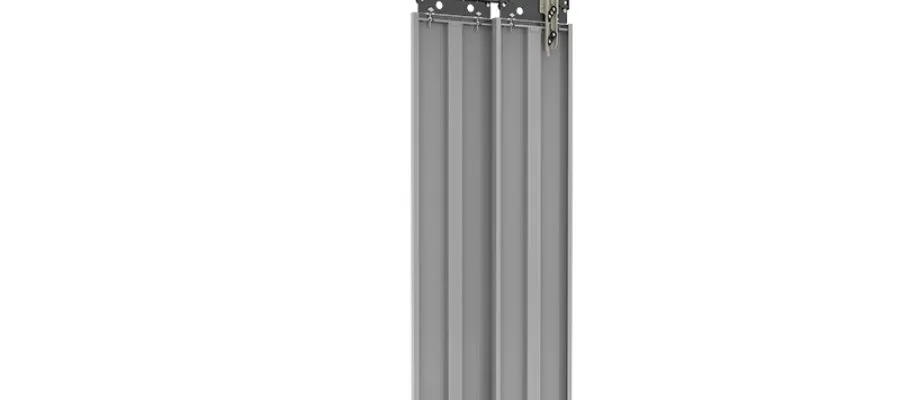


EN 81-20 is the European standard that collects construction and installation safety rules for passenger elevators. On the door, three headings land on site: a locked landing door must not open when the car is away, gaps between leaves and frame must stay within the limit, and protection that reduces trapping on close. ECHO meets these points with lock-and-coupler geometry and the installation guide. The sentence “to standard” is not certification on its own.
EN 81-20 does not give fire rating by itself. Landing-door fire behavior depends on the EN 81-58 test and the EN 13501-2 class. Some calculations and type tests sit in EN 81-50. Writing only “EN 81-20 door” on the specification leaves duration and the E/I/W class blank.
81-20 compliance is not a label. It is lock, door coupler and panel gap staying inside the tolerances in the guide.
ECHO technical team
Why does the door coupler (lock fork) have its own guide?
The coupler lets the cabin-door operator release the landing lock. Length, opening travel and lock counterpart vary by maker and operator family. ECHO publishes this geometry in the “81-20 Door Coupler Guide” PDF. If the installer bends the coupler “by eye” without the guide, the lock either opens early or not at all. Either break the safety chain.
Which EN 81-20 checks are done on site?
Regulation and standard are not the same
2014/33/AB, the Lifts Directive, is the legal framework for placing on the market. EN 81-20 is the harmonised standard on the path into that framework. Conformity assessment of the elevator sits with the installer / the person placing it on the market. The door maker supplies the component and the guides. An ECHO delivery file holds the landing and cabin installation guides, the coupler guide and, if fire was specified, the relevant test document.
PDFs: 81-20 Door Coupler Guide, Landing Door Installation Guide, Cabin Door Installation Guide, Spare Parts List — Documents page.