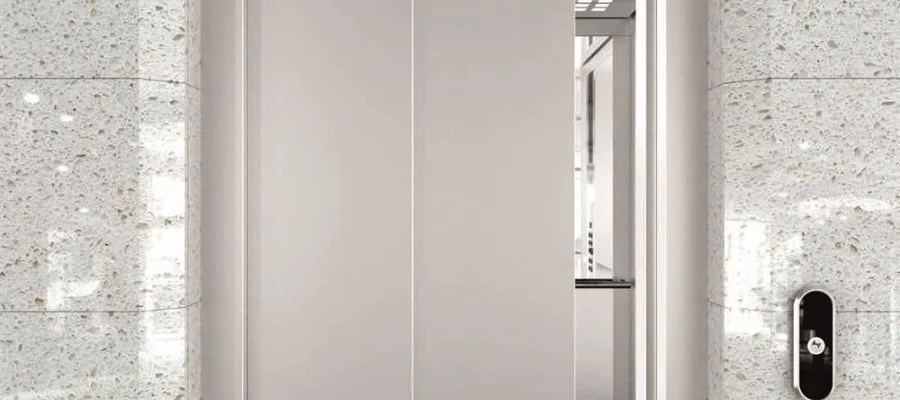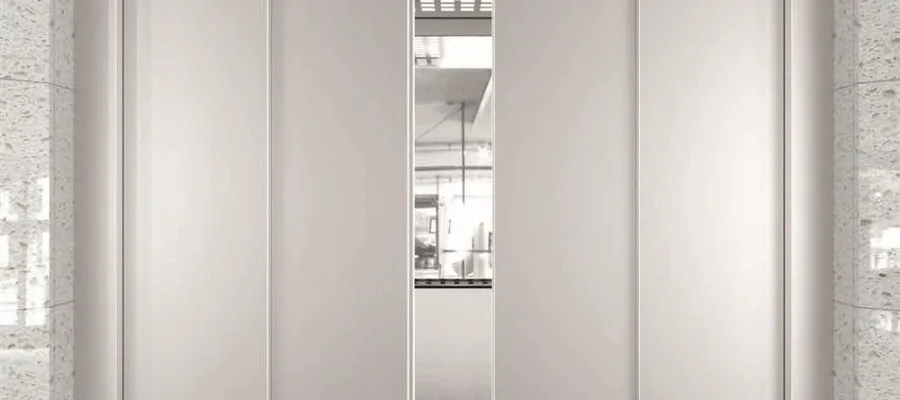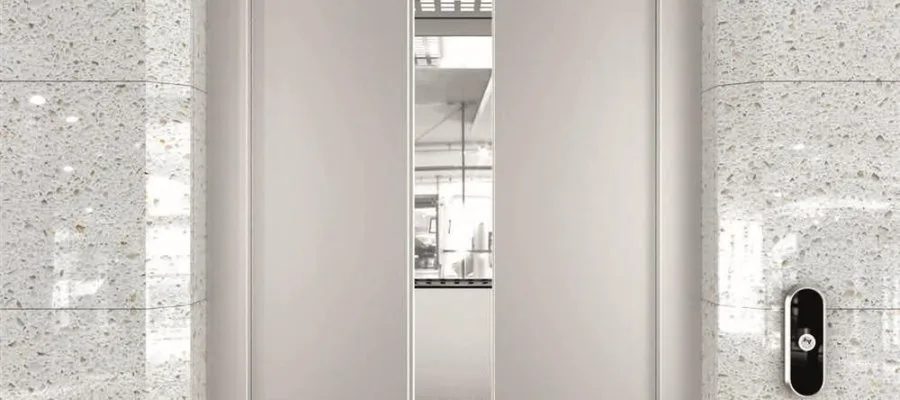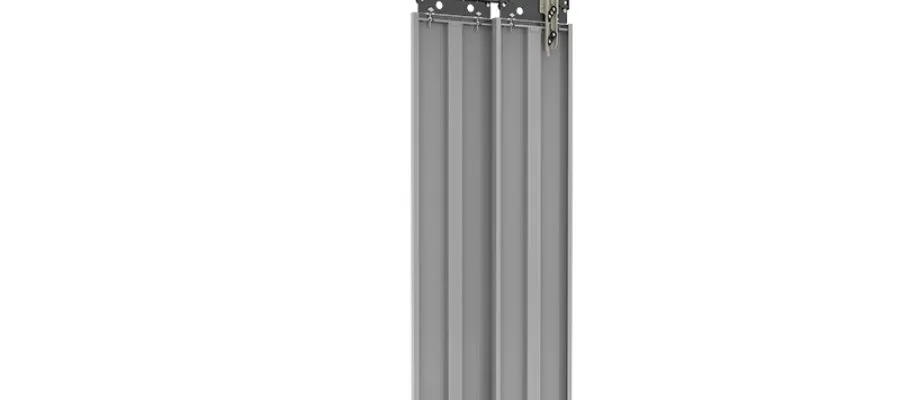

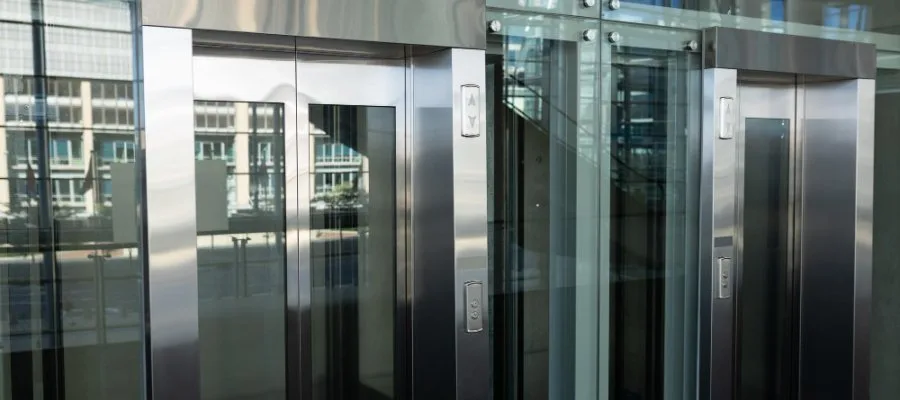
In a fire the elevator shaft is a vertical void; the landing door is the element that separates that void from the floors. That is why fire rating is written on the landing door. The cabin door is not a fire barrier. An order for a “fire elevator door” should not be locked for production until the E / EI / EW class and duration sit on the landing-door line.
What do E, EI and EW mean?
Classification follows EN 13501-2. E (integrity): flame and hot gas do not pass the door plane. I (insulation): temperature rise on the unexposed face stays within the limit. W (radiation): radiation. Duration is written as 30, 60, 90, 120 minutes (e.g. E 60, EI 30). The project designer writes the class from the fire scenario; the door maker builds the body and seals to that class. A class you do not have is not rounded to “about EI 60”.
Which test standard applies?
The landing-door fire test is EN 81-58. The result is for the panel, glass (if any), lock and seal combination that was tested. On a glazed door the fire glass and frame detail are part of the same test; ordinary laminated glass does not give a fire class. Read the certificate by report number and scope in the delivery file. The Certificates gallery on the site is visual; the wording for the specification comes from the document itself.
What sentence belongs on the specification?
On ECHO landing doors the fire option is locked on the order line. If duration and class are not clear, production proceeds as a painted “standard door”. Converting later to a fire body means changing sheet and seals; it is not done with paint on site.